|
Bare feet and Smiles
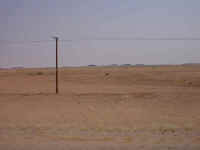
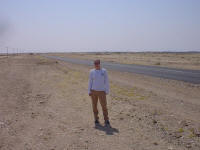
If I just look out the window, I see the yellow grasses, stubby dust-green bushes dotting the plain, brown-gray mountains in the distance, and a hazy horizon making the whole scene bleak and inhospitable. But if I look out the window and say to myself, “I’m in Africa,” then all this takes on some sort of significance. In a lot of ways, Africa is almost a mythological place. Just the word “Africa” conjures up a whole host of connotations—most probably derived from news clips of civil war in Liberia, images from films such as Black Hawk Down where the brave Americans are trying to save the African people from themselves, footage of people begging at food aid distribution points, and “for only a dollar a day you can help this child” ads portraying a scantily clad child with a fly on his/her face, grubby fingers in mouth, and distended stomach protruding for all to see that this child is suffering from hunger and malnutrition and needs your help. But here in this mythological land, I’ve discovered a different Africa—one like the desert outside my window. Should I feel sorry for the measly shrubs that can never get enough water? No, instead I admire their perseverance and adaptability to survive in a harsh condition where our pampered temperate forests could never survive. So it is with the people. Perhaps you could say I’ve hardened my heart, but I think it’s just that I’ve realized an Africa different from the one portrayed on our television screens where everyone seems to be begging the developed world for help. I’ve learned that Africa is a place of strength, adaptability and perseverance. Maybe they wish they could have the easy life we have, I don’t doubt that. The evidence is in the number of times I’ve been asked for money, bread, sweets, etc. But don’t be fooled. They’re capable and strong—like the beautiful desert plants. Our bus just stopped at Usakos, the workers village for the Rössing uranium mine. A few men got dropped off at their houses and barefoot children ran out over the gravel to greet their fathers/brothers with hugs and smiles. Which do you see? The smiles or the bare feet? Back on the road again, I carry the smiles with me—not the bare feet. You can survive without shoes but not without smiles. I don’t mean to justify poverty—but I do mean to dissuade the arrogance that accompanies pity. In the end, if we are honest, we will see both the smiles and the bare feet equally. As a developing country, Namibia has it’s share of problems—the HIV/AIDS crisis is diminishing the population and leaving a wake of orphans, I can personally testify that the education system is pathetic, many people still do not exert complete control over their life choices, the suicide rate is high, teenage pregnancy forces many young girls to drop out of school… But the people are struggling against these problems, and it is in the struggle that I see hope. I now find myself on a road resembling a picture I saw in the Namibia book before I came here: a road seemingly in the middle of nowhere, flanked on both sides by endless desert and old, tired mountains. A few shrubs defy the sand and waterless skies. I hated and feared this bleakness when I first came to Africa, but now I know the secret. The beauty is in the struggle. love, Sera
|